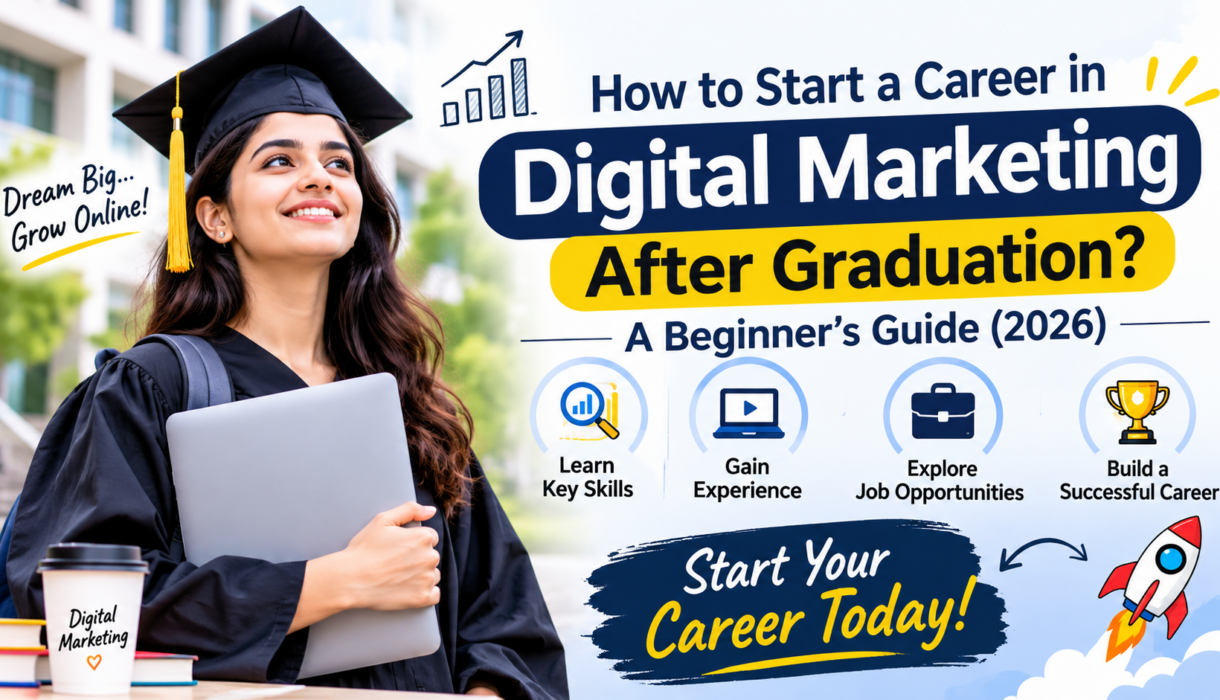
How to Start a Career in Digital Marketing After Graduation: A Beginner’s Guide (2026)
Posted in :

Introduction
Have you recently completed your graduation and are confused about which career path to choose?
Many fresh graduates face the same challenge. They want a successful career but often lack practical skills, professional experience, and proper guidance.
Digital marketing is one career option that graduates from different educational backgrounds can explore. As businesses use websites, search engines, and social media to connect with customers, they need professionals who understand online marketing.
But where should you begin if you have no experience?
In this guide, you will discover the essential digital marketing skills, practical learning steps, and job opportunities that can help you start your career after graduation.
1. Understand Digital Marketing and Learn Essential Skills
Before applying for jobs, it is important to understand what digital marketing involves.
Digital marketing means promoting products, services, or brands through online platforms such as Google, Instagram, Facebook, LinkedIn, and websites.
You can begin by learning these important skills:
- Search Engine Optimization (SEO): Learn how websites improve their visibility in search engine results.
- Social Media Marketing: Understand how businesses create content and engage audiences on social platforms.
- Content Marketing: Learn to write blogs, social media captions, and useful marketing content.
- Email Marketing: Understand how businesses communicate with subscribers through email campaigns.
- Google Analytics: Learn how to measure website traffic and understand visitor behaviour.
You don’t need to master everything immediately. Choose one area that interests you and develop your knowledge gradually.
Free learning resources such as Google Skillshop, HubSpot Academy, and YouTube tutorials can help you understand basic concepts.
2. Gain Practical Experience and Build Your Portfolio
Learning digital marketing concepts is useful, but practical experience helps you demonstrate your abilities to employers.
The good news is that you can start practising without having a full-time job.
Follow these simple steps:
Step 1: Create Your Own Blog
Start a basic website or blog and publish informative articles. Practise keyword research and basic SEO techniques.
Step 2: Manage a Social Media Page
Create a professional Instagram or LinkedIn page. Develop a content calendar, publish posts, and monitor engagement.
Step 3: Learn Marketing Tools
Practise using Canva, Google Trends, Google Search Console, and Google Analytics.
Step 4: Build a Portfolio
Collect your blog articles, social media designs, content calendars, and project results in one place.
A portfolio helps employers understand your skills even when you have limited professional experience.
You can also explore internships, volunteer projects, or beginner-friendly freelance assignments to gain experience.
3. Explore Digital Marketing Jobs and Prepare for Interviews
Once you understand the basics and have completed practical projects, start exploring entry-level opportunities.
Some common digital marketing job roles include:
- Digital Marketing Intern
- SEO Executive
- Social Media Executive
- Content Marketing Executive
- Digital Marketing Executive
Create a professional resume highlighting your skills, certifications, internships, and projects.
You can search for opportunities through LinkedIn, Naukri, Internshala, and company career pages.
Before attending interviews, revise important concepts such as SEO, keywords, content strategy, and social media engagement.
Be prepared to explain your practical projects and what you learned from them.
Remember, employers may value your ability to apply knowledge, solve problems, and learn new skills.
Conclusion
Starting a career in digital marketing after graduation may seem challenging, but a clear learning plan can make the process easier.
Begin with fundamental concepts, select a skill, practise regularly, and build a portfolio that demonstrates your abilities.
You do not need years of experience to start learning. Consistency, curiosity, and practical knowledge can help you prepare for entry-level opportunities.
Ready to Start Your Digital Marketing Career?
Take your first step today! Choose one digital marketing skill, complete a small project, and begin building your professional portfolio.
Start learning today and move closer to your digital marketing career goals!
